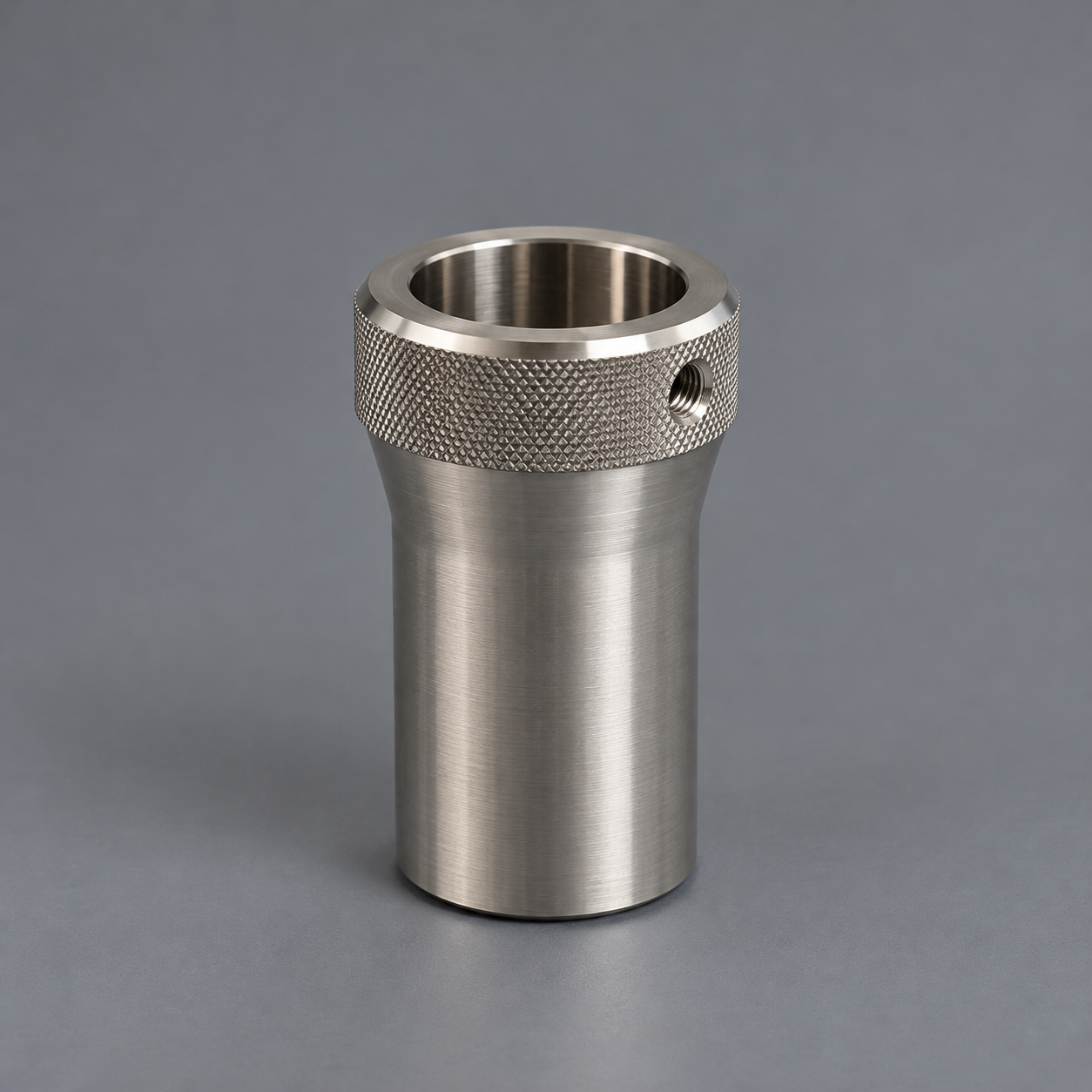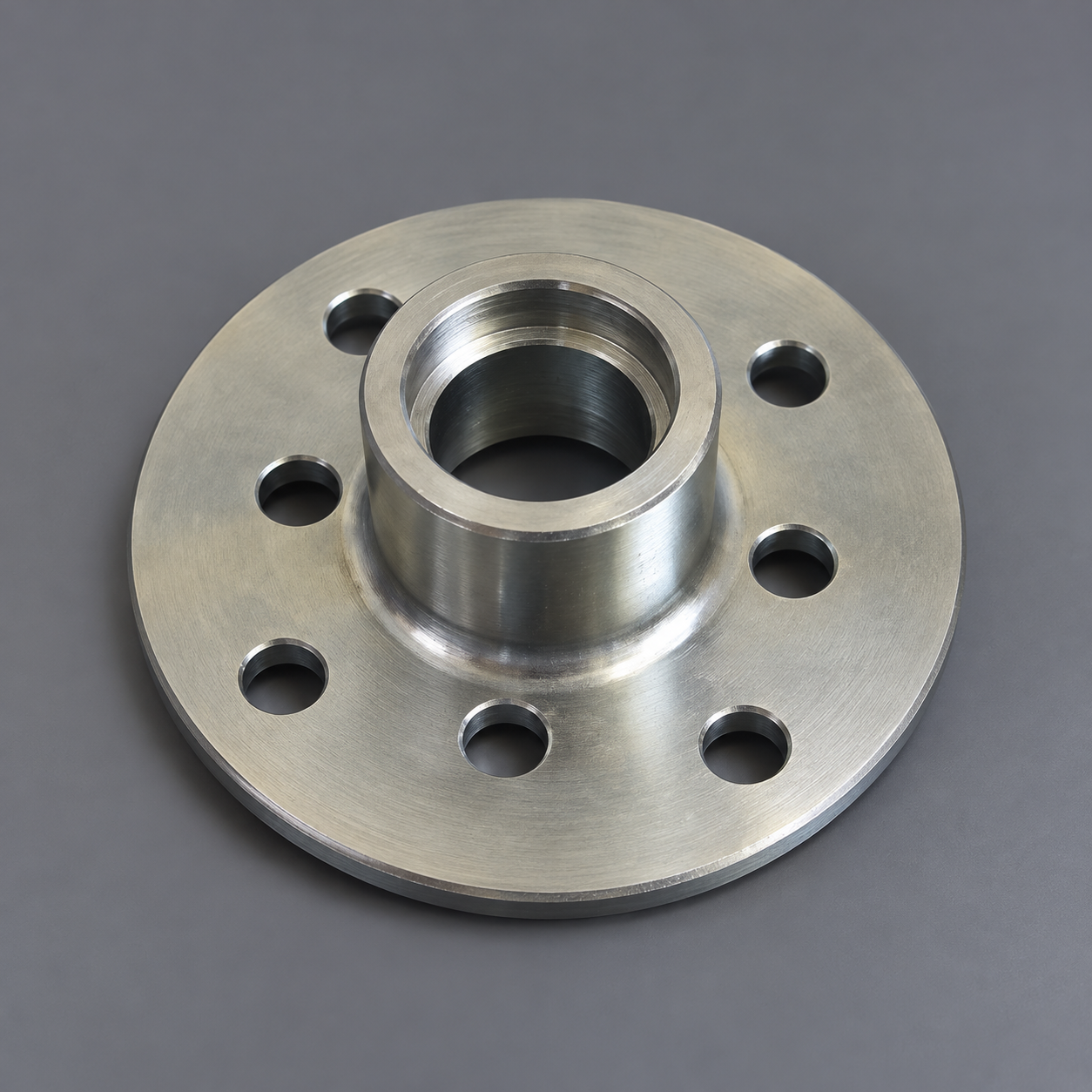

42CrMo Precision Knurled Locating Sleeve

From concept to production in 25 days High-quality, cost-efficient rapid tooling solution.

25 Days

Total Lead Time

±0.02 mm

Precision Tolerance

100K+ Shots

Mold Life

0 PPM

Quality Target

Project Overview

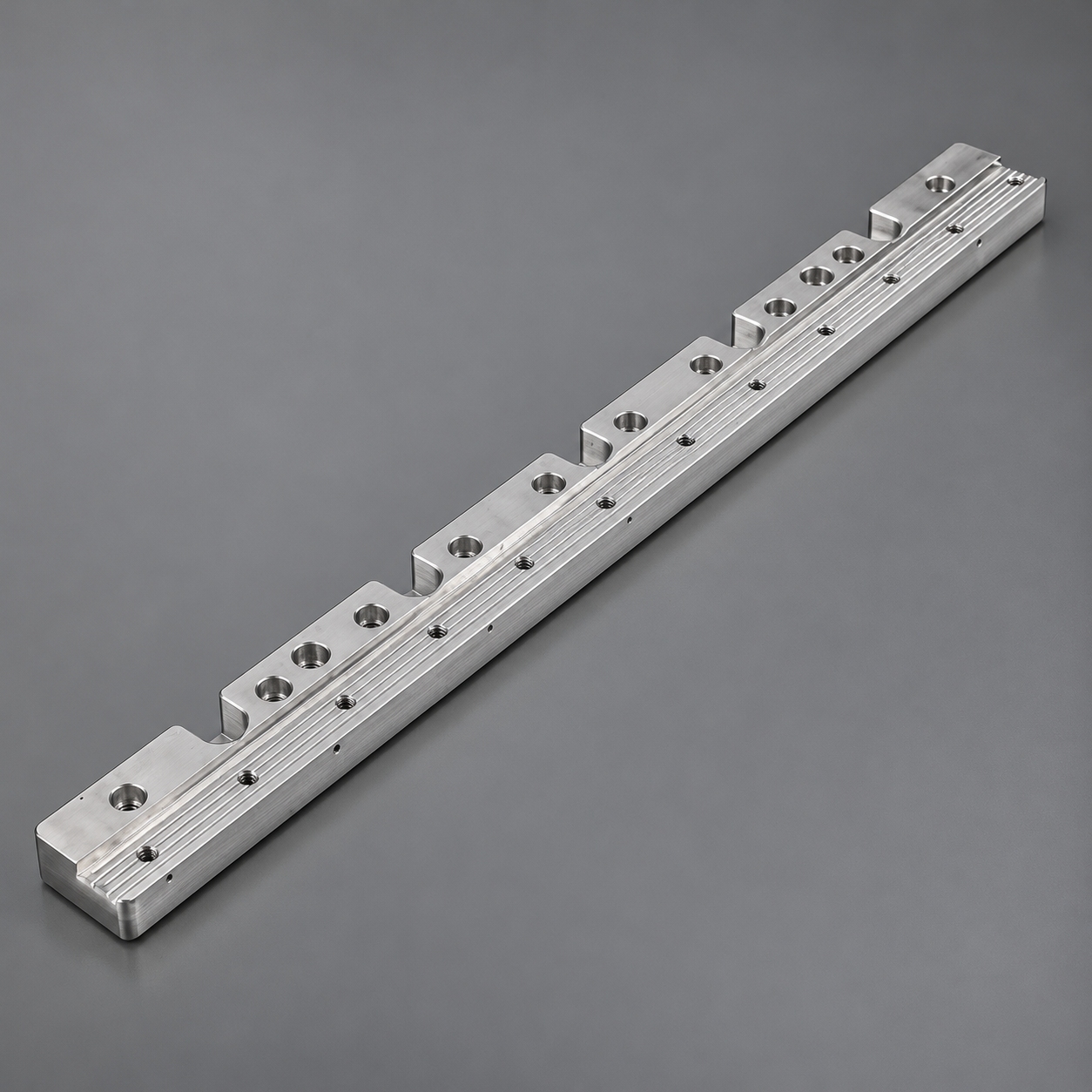
This project involved the manufacture of a long-format precision aluminum mounting base for solar photovoltaic production and related automation equipment.
The component is approximately 1,400 mm long and is manufactured from EN AW-6061-T6 aluminum with a clear anodized finish. It incorporates multiple precision holes, threaded mounting points, locating features, slots and repeated interfaces distributed along the full length of the part.
The component is designed to provide a stable and accurately aligned mounting platform for equipment or fixture components where repeatable positioning is important.

Key specifications:
• Material: EN AW-6061-T6 aluminum
• Overall length: 1,400 mm class
• Surface finish: Clear anodize
• General tolerance: ISO 2768-m
• Precision features: H7/H14 holes and controlled hole patterns
• Threads: M14-6H and M8-6H
• Geometric requirements: Flatness and parallelism control
• Application field: Solar PV production / industrial automation equipment

Previous slide
Next slide

The Challenge

The main challenge was not simply machining the individual holes and profiles, but maintaining dimensional stability and positional accuracy across a long aluminum component.
Because the part is approximately 1,400 mm long, uneven material removal or excessive clamping force can cause bending, twisting or dimensional movement after the component is released from the fixture. This can directly affect flatness, parallelism and the relative position of mounting features.
Another challenge was controlling accumulated positional error across the repeated hole pattern. Even a small error at each machining position can become significant over the full length of the component.
The drawing also includes precision features such as a 12.02 H7 dimension, threaded M14/M8 interfaces, specified surface roughness and geometric tolerances. These requirements meant that machining sequence, datum selection, workholding and final inspection all had to be considered together rather than treating each feature independently.
Previous slide
Next slide

Our Solution

We developed the manufacturing process around dimensional stability, common datum control and staged precision machining.
1. Material and preparation Certified EN AW-6061-T6 aluminum stock was selected with sufficient machining allowance. The raw material was checked before machining to reduce the risk of starting with excessive bow or twist.
2. Stable datum establishment Primary reference surfaces were machined first to create reliable datums for subsequent operations. These datums were then used to control the relationship between the long profile, hole pattern and locating features.
3. Controlled long-part machining Material removal was planned in stages instead of aggressively finishing one side at once. Clamping points were distributed along the component to provide support while avoiding excessive localized clamping force that could distort the aluminum.
4. Precision feature machining After the main geometry was stabilized, critical locating features and precision holes were finish-machined. H7 features were controlled separately from general-tolerance holes, while M14 and M8 threaded holes were produced and inspected according to the specified 6H tolerance class.
5. Hole-pattern control Repeated mounting features were machined from a consistent coordinate system to minimize pitch accumulation error over the full component length.
6. Inspection Critical dimensions were checked against the drawing, including overall length, repeated hole positions, precision locating features, threads, flatness/parallelism and specified surface roughness. Thread gauges and suitable dimensional inspection equipment were used for functional features.
7. Surface finishing and protection After dimensional inspection, the component received clear anodizing. The finished surface was visually checked and the part was protectively packed to reduce scratching or handling damage during shipment.

Project Results

The completed component achieved the required combination of long-part dimensional control, repeatable mounting geometry and clean anodized appearance.
By controlling the machining sequence, datum strategy and clamping method, the manufacturing process was designed to minimize distortion and maintain alignment between features distributed across the 1,400 mm component.

The finished part provides:
• Stable mounting and positioning surfaces
• Consistent repeated hole and interface locations
• Precision-machined locating features
• Controlled flatness and parallelism
• Verified threaded mounting interfaces
• Clear anodized corrosion-resistant surface
• Protective packaging for transportation

This project demonstrates our capability to manufacture long-format precision aluminum components for solar PV production equipment, industrial automation systems, fixtures and positioning assemblies where dimensional stability and repeatable alignment are critical.
Note: The customer drawing identifies the component as a “Base” but does not specify the exact machine or final assembly. Therefore, the application description above is intentionally presented as a solar PV / industrial equipment application rather than claiming a specific machine function.

Project Photos

Customer Feedback

“

The tooling quality exceeded our expectations. The parts met all requirements and the lead time was impressive. We highly recommend their rapid tooling service.

— Project Manager, Automotive Lighting Company

Why Choose Us

10+ Years

Industry Experience

1000+

Successful Projects

Advanced Equipment

Precision Manufacturing

Strict Quality Control

ISO 9001 Certified

Global Service

Local Support

Have a Cast + CNC Part to Quote?

Send us your 2D drawing or 3D model. We can review the geometry, material, quantity and tolerance requirements and suggest a practical manufacturing route.

Drag & Drop Files, Choose Files to Upload
=